Replace your tires when the tread is worn to 2/32 of an inch, which is 1.5 mm. NHTSA's test: if you can see the top of Lincoln's head when you put a penny in the tread, it's time. Some vehicle and tire makers also recommend replacing tires at 6 to 10 years old, whatever the tread looks like.
So there are two clocks: tread, which you can see, and age, which you can't. NHTSA says you cannot detect tire aging by looking at your tires.
When to replace tires: the tread
- 2/32 inch is the limit. NHTSA says tires are not safe and should be replaced when the tread is worn to 2/32 of an inch (NHTSA).
- Use the wear bars. Tires have built-in treadwear indicators. When the tread is level with them, NHTSA says it's time to replace.
- Or the penny. Put a penny in the tread. If you can see the top of Lincoln's head, replace your tires.
- Snow is stricter. Transport Canada says tires worn close to 4 mm (5/32 inch) shouldn't be used on snow-covered roads (Transport Canada).
- Damage counts too. NHTSA lists cuts, cracks and bulges, and irregular wear from underinflation or overloading, as signs a tire needs attention.
When to replace tires: the age
There's no official expiry date. NHTSA notes that some vehicle and tire manufacturers recommend replacing tires that are 6 to 10 years old, regardless of tread. It also warns that cars that sit a lot, or with low annual mileage, are most at risk, because their tires age before they wear out.
How to find your tire's age: look for the Tire Identification Number (TIN) on the sidewall, and check both sides because it may only be on one. NHTSA says the last four digits are the week and year the tire was made: "0308" means the third week of 2008.
Tire pressure: the monthly job
- Check monthly, cold, spare included. That's the advice from both NHTSA and Transport Canada.
- Use the number on the door, not the tire. NHTSA says the correct pressure is the one the vehicle manufacturer lists, on the driver's door edge or post or in the manual, NOT the number on the tire.
- Don't wait for the warning light. NHTSA says that if the TPMS light comes on, at least one tire is already significantly underinflated. Underinflation is hard to see by eye.
- Cold changes the reading. Transport Canada says a tire that's fine in a warm garage will be underinflated when it's below zero outside.
Rotation and winter tires
- Rotation: NHTSA says to rotate every 5,000–8,000 miles if your manufacturer recommends it. Transport Canada's rule of thumb is about every 10,000 km.
- Winter tires: below 7°C, all-season and summer tires begin to lose elasticity and traction, says Transport Canada (Transport Canada). Look for the peaked mountain with snowflake symbol, and fit winter tires in sets of four.
Two numbers worth keeping
Last. is an iPhone app that counts the days since you last did something. For tires, it covers the two things you can't see:
- "Checked tire pressure" with the "~ monthly" nudge. One reminder a month after the last check, which is the NHTSA rhythm.
- "New tires" set to the day they went on. Six years is about 2,190 days, the low end of the age range some makers give.
- Optional: "Winter tires on", so next spring you know exactly when they went on.
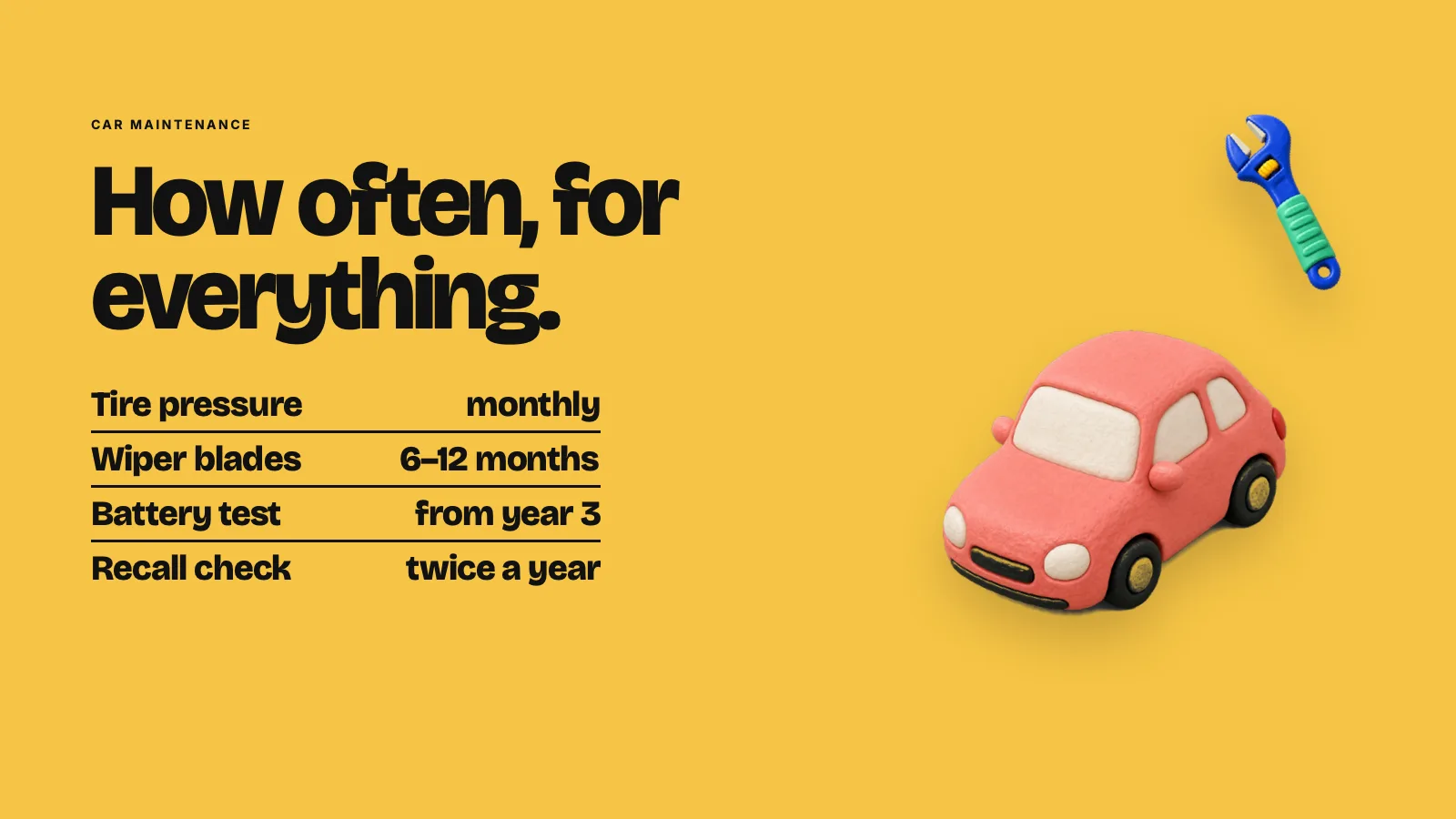
It's free for up to 7 things, with no ads. The full car schedule is in Car maintenance: how often should you do everything?
FAQ
How often should you replace your tires?
When the tread is worn to 2/32 inch (1.5 mm), when it's level with the treadwear indicators, or if the tire is damaged (NHTSA). Some makers also recommend replacement at 6–10 years old.
How do I know how old my tires are?
Read the last four digits of the Tire Identification Number on the sidewall: week, then year. "0308" is the third week of 2008 (NHTSA).
How often should I check tire pressure?
At least once a month, with the tires cold, including the spare (NHTSA, Transport Canada).
When should I put winter tires on?
Transport Canada says all-season and summer tires start losing traction below 7°C. Fit winter tires with the mountain-and-snowflake symbol, in sets of four.